

Iron
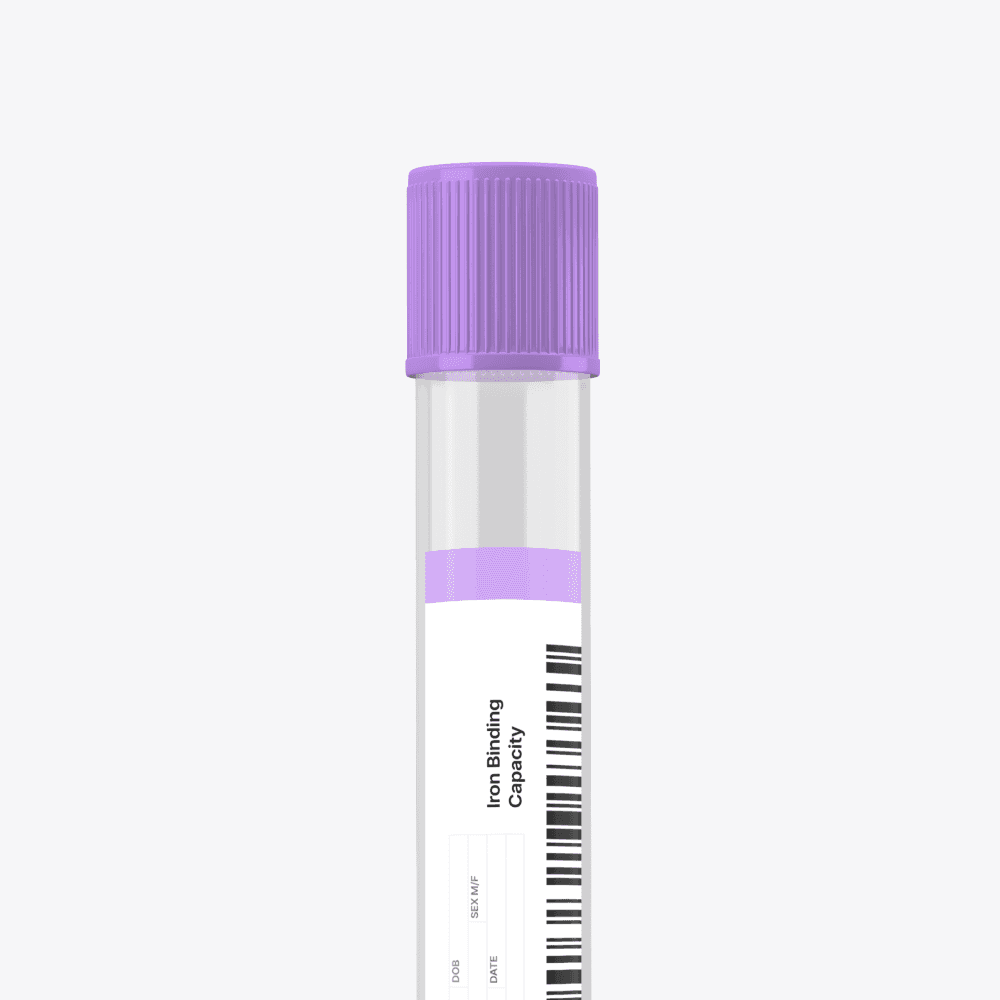
Iron Binding Capacity
What This Marker Tells Us
Measures the maximum amount of iron that can bind to transferrin, revealing the body's capacity to transport iron.
Why It Matters
TIBC rises when iron is deficient as the body produces more transferrin to capture any available iron. TIBC falls when iron is replete or in chronic inflammation. Combined with serum iron, TIBC calculates percent saturation, which is a key indicator of iron availability. This marker helps distinguish iron deficiency from inflammation-related anemia and identifies iron overload conditions. TIBC completes the iron panel interpretation.
How to Interpret Your Trends
Low TIBC (below 250 μg/dL) suggests iron overload, chronic inflammation, malnutrition, or liver disease impairing transferrin production. Typical TIBC (250-450 μg/dL) indicates normal iron transport capacity. High TIBC (above 450 μg/dL) signals iron deficiency as the body maximizes transferrin to capture scarce iron, or pregnancy increasing iron needs. Context from iron and ferritin determines the pattern.
What Influences This Marker
Low iron intake, heavy menstrual bleeding, high endurance training load, chronic inflammation, infections, liver function, pregnancy, and supplement timing. TIBC rises with iron deficiency and falls with inflammation or excess iron.
How Your Team Uses It
Coaches integrate TIBC trends with ferritin and % saturation to identify early iron depletion before symptoms appear. This guides protein and iron timing, supplementation discussions, and training load adjustments to prevent fatigue and reduced performance.
Related Signals We Also Review
Ferritin, Iron, % Saturation, Hemoglobin, MCV/MCHC, inflammatory markers (hs-CRP), menstrual cycle patterns, fatigue and recovery logs.